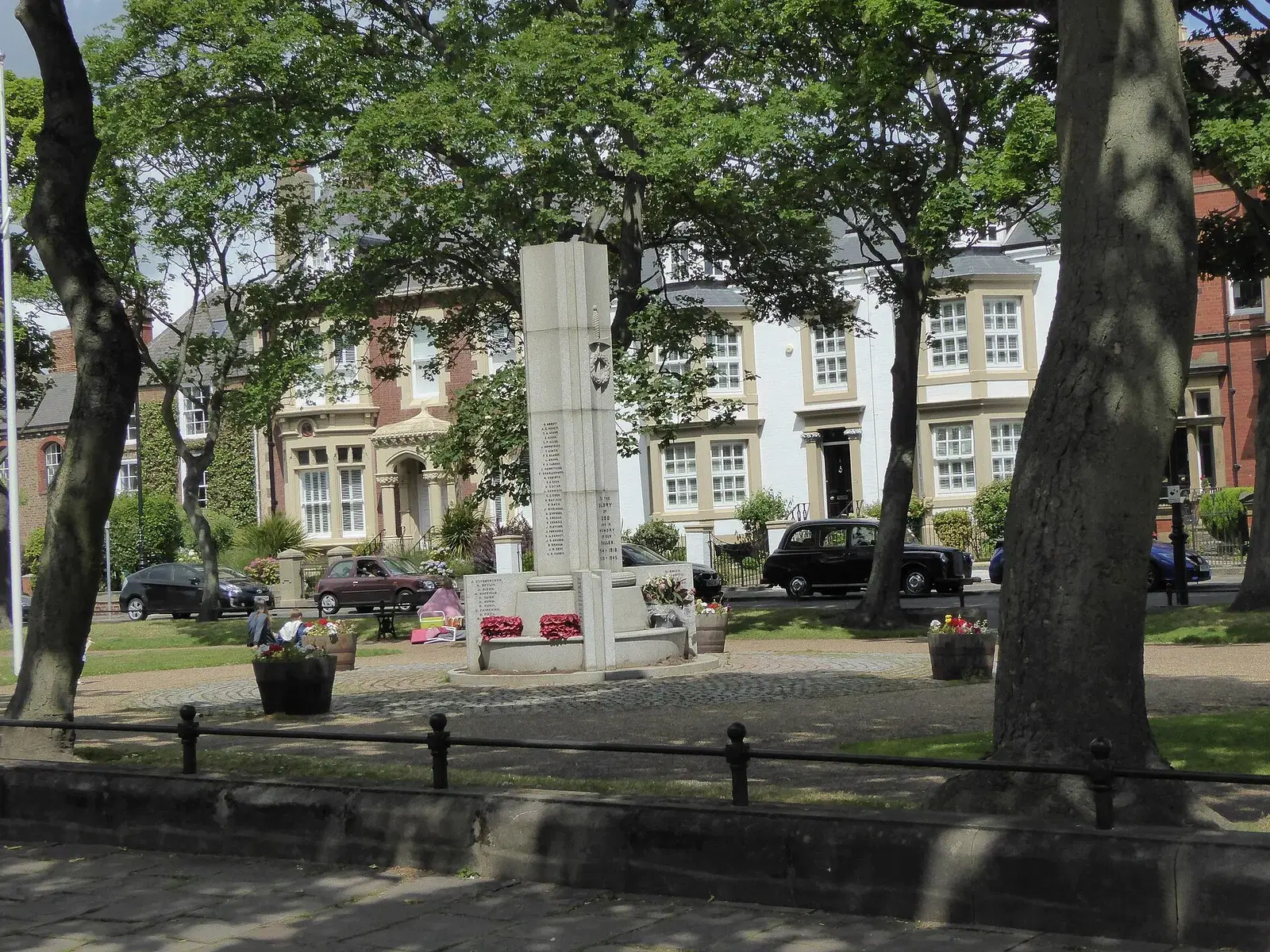
Tynemouth in World War Two
How the headland town lived through the Second World War, from the coastal gun batteries guarding the mouth of the Tyne to the air raids and the terrible Wilkinson's shelter disaster of May 1941.
For a town perched at the mouth of the Tyne, the Second World War arrived early and stayed close. Tynemouth guarded one of the most important river entrances in the country, and the guns on its headlands, the shelters beneath its streets and the raids that fell on the borough all left marks that local families still remember. This is a careful look back at how the headland town lived through those years, told as accurately as the records allow.
Guardian of the river mouth
The mouth of the Tyne had been fortified for centuries, and by the Second World War the headland at Tynemouth Priory and Castle held one of the most important coastal gun positions on the north-east coast. The Castle Battery, commissioned in 1904 as part of the Tyne defences, sat within the castle walls and was armed with a 9.2 inch gun, 6 inch guns and lighter quick-firing pieces. On the promontory just below, the Spanish Battery, a gun site since Tudor times, carried 6 inch guns until it was stood down from active service in 1943.
Together with the batteries on the South Shields side, these guns commanded the Narrows where the river meets the sea. Their job was to deter enemy warships from attacking shipping in the Tyne, and by that measure they succeeded, for they saw out both world wars without ever firing on an enemy vessel. Searchlights added to the defence: one stood on the Spanish Battery and another was placed above the pier, throwing beams across the harbour entrance so that the gun crews on both headlands could pick out any target at the river mouth.
Best for: The coastal batteries at Tynemouth guarded the Tyne through both world wars yet never engaged an enemy ship. Their deterrent worked.
Locking the harbour
The river itself was defended as well as the shore. In December 1939, within months of war breaking out, German destroyers laid hundreds of mines in the approaches to the Tyne, and more followed a month later, so that clearing and watching the sea lanes became a constant task. Plans were even drawn up to lock the harbour outright, including a scheme to string enormous iron gates between the two piers, some 360 yards apart, and a last-resort proposal to scuttle a blockship in the Narrows. The gates were never fitted, but the ideas show how seriously the threat of a raid up the river was taken.
The pier and the coast below the batteries had their own guardians in peace and war. The volunteers of the Tynemouth Volunteer Life Brigade Watch House, founded in 1864 after a wreck on the Black Middens, kept their long watch over the treacherous rocks and the harbour entrance throughout these years, a reminder that the sea itself remained as dangerous as any enemy.
The raids on the borough
Tynemouth borough, which then took in North Shields and the streets running down to the river, was bombed repeatedly. Across the war, 310 bombs fell on the borough on 31 separate occasions, killing 225 people. The first bombs came in the summer of 1940 and the last in the spring of 1943. Parachute mines were among the earliest weapons to arrive, with one coming down on the bowling green in Tynemouth Park in October 1940, and the falling of unexploded mines forced the evacuation of streets in Tynemouth and North Shields more than once.
Air-raid precautions shaped everyday life. Public shelters were dug and brick surface shelters raised on street corners, families made do with Anderson shelters in their yards, and wardens, fire crews and Civil Defence workers turned out night after night. One of the worst raids came in the spring of 1941, when high-explosive bombs and thousands of incendiaries fell together across the borough, but the single most terrible night was still to come.
The Wilkinson's shelter disaster
Shortly before midnight on Saturday 3 May 1941, a lone German raider dropped a stick of bombs on North Shields, a short walk from Tynemouth's own streets. Around 192 people were sheltering in the public air-raid shelter in the basement of Wilkinson's lemonade factory, on the corner of King Street and George Street, when the fourth bomb scored a direct hit and brought the building down on top of them.
One hundred and seven people were killed, many of them children, and whole families were lost in a single moment. It stands as the greatest loss of life from one bomb anywhere in wartime Britain. Air-raid wardens and rescue workers dug through the wreckage for days, and among those honoured afterwards was the warden Ellen Lee, who stayed at the escape route and helped survivors out despite being badly burned herself. The disaster is remembered today by a memorial in North Shields, and it remains the defining wound of the war for this stretch of the coast.
Best for: The Wilkinson's factory disaster of 3 May 1941 killed 107 people, the greatest loss of life from a single bomb anywhere in wartime Britain.
Remembering the war years
Peace found the headland changed but standing. The guns were removed from the Spanish Battery in the years after the war and cleared from the site by 1954, while the army did not finally leave the Castle Battery until 1956. The old defences on the headland now sit quietly beside the medieval ruins, part of a story of watching the sea that runs from the priory monks through Admiral Collingwood to the gun crews of the 1940s.
That naval thread is written into the town's most famous landmark. The Collingwood Monument, raised in 1845 to Vice Admiral Cuthbert Collingwood, Nelson's second in command at Trafalgar, still looks out from the bank above the river the admiral knew as a boy, its guns taken from his flagship the Royal Sovereign. Below it the Tyne runs on, past the batteries that guarded it and the streets that suffered for it. Remembering those years accurately, without exaggeration and without forgetting, is the least the town can do for the people who lived through them.
Have a suggestion? Get in touch.
Never miss what’s on
Join the weekly Tynemouth.live digest — the best events, news and local tips, straight to your inbox. Free, one email a week.