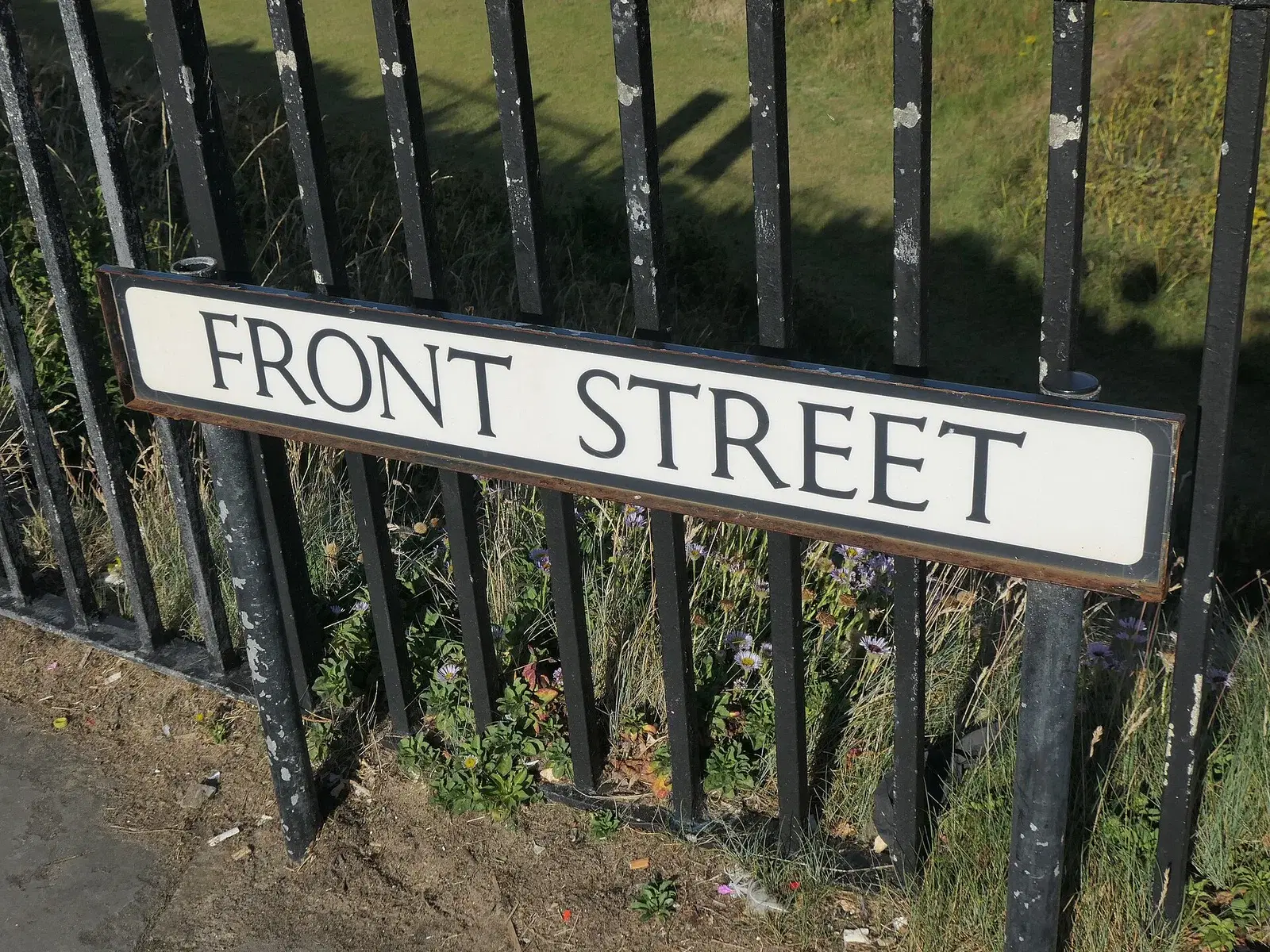
The History of Tynemouth's Front Street
How a broad Georgian street running down to the sea became the heart of a fashionable seaside resort, then a village of independent shops, pubs and a church turned shopping arcade. The story of Tynemouth's Front Street.
Front Street is Tynemouth's spine. Unusually wide for an old English street, it runs from the village down towards the sea and the ruins of the priory, and almost everything that matters in Tynemouth happens along it or just off it. Its shape and its handsome buildings are not accidents: they are the record of how a small settlement beside a medieval priory grew into one of the North East's most fashionable seaside resorts and then into the village of independent shops we know today. Here is how Front Street came to look the way it does.
A street laid out towards the priory
Tynemouth grew up around its clifftop priory, and the settlement that served it was strung along the approach to the headland. That is why Front Street points so directly at Tynemouth Priory and Castle and the sea beyond. The street's generous width, rare in a town of medieval origin, gave it room to become a proper commercial thoroughfare rather than a cramped lane, and that breadth is still one of the first things visitors notice today.
Georgian elegance and the fashion for sea-bathing
The street's character was set in the Georgian period. From the late eighteenth century sea-bathing became fashionable, and well-to-do visitors began coming to Tynemouth to take the air and the waters from its east-facing beaches. Front Street filled with elegant brick houses built in strict Georgian symmetry, with red brick, tall sash windows and classical proportions, designed to accommodate those visitors. Many of those buildings survive above the modern shopfronts, so a walk along Front Street with your eyes raised is a walk through the resort's polite beginnings.
Best for: Best for architecture spotting: look above the shopfronts for the tall sash windows and symmetry of the original Georgian townhouses.
The railway brings the golden age
If sea-bathing started Tynemouth's rise, the railway completed it. When the line reached the coast, day-trippers and holidaymakers arrived in their thousands, and the town entered what locals call its golden age. Grand terraces went up along the Grand Parade above the beach, hotels and boarding houses multiplied, and Front Street became the shopping and social heart of a busy resort. The great glazed station that opened in 1882 was built precisely to handle those crowds.
The Cumberland Arms and the Victorian street
The Victorian building boom left its mark all along Front Street. Among the most recognisable landmarks is the Cumberland Arms, built in 1898 in a confident Victorian style, one of a run of pubs that have anchored the street's social life for well over a century. Tynemouth's pubs are part of the fabric of Front Street rather than an afterthought, and several of them occupy buildings that have served drinkers since the resort's heyday.
A church that became a shopping arcade
One of Front Street's quirkier stories belongs to the Land of Green Ginger. It began as a Congregational church, built in 1868 by the architect Thomas Oliver and given its spire in 1873. The congregation declined and the church closed in 1973, and in 1980 the striking stone building was converted into a shopping arcade of independent units, craft stalls and a restaurant. It is Grade II listed, and its survival as a place of trade rather than a demolition site is a small victory for the street.
An admiral at the foot of the street
Where Front Street gives way to Pier Road, the Collingwood Monument rises above the river mouth. Completed in 1845, the towering statue of Nelson's second in command at Trafalgar gives the whole street a dramatic full stop and a reminder of Tynemouth's deep naval connections. Few high streets in the country end quite so grandly.
Front Street today
Modern Front Street has reinvented itself once again, this time as a village of independent shops, delis, cafes and pubs that draw people from across Tyneside at weekends. The Georgian bones, the Victorian pubs, the converted church and the seaside setting all remain, and the weekend market in the nearby station keeps the crowds coming. It is a street that has been a place to shop, socialise and stroll to the sea for the best part of two hundred years, and it still is.
Frequently asked questions
What is Tynemouth's main shopping street? Front Street is Tynemouth's principal shopping street, a broad thoroughfare running from the village down towards the sea and the priory. It is lined with independent shops, delis, cafes and traditional pubs, and connects to the weekend market held in the nearby Victorian station.
Why is Front Street so wide? Front Street was laid out as the main approach to Tynemouth Priory and grew into a commercial thoroughfare during the town's development as a Georgian and Victorian seaside resort. Its unusual width gave it room to become a proper shopping street rather than a narrow medieval lane, and it made the street ideal for the crowds of the resort's golden age.
What is the Land of Green Ginger? It is a shopping arcade on Front Street housed in a former Congregational church, built in 1868 and converted to retail units in 1980. The Grade II listed building now contains independent shops and craft units, one of Tynemouth's more unusual reuses of a historic landmark.
Have a suggestion? Get in touch.
Never miss what’s on
Join the weekly Tynemouth.live digest — the best events, news and local tips, straight to your inbox. Free, one email a week.