The Lost Buildings of Tynemouth
From the great glass pleasure palace that burned down in a night to the beloved outdoor pool bulldozed into its own basin, here are the Tynemouth landmarks that fire, storms and the demolition men took away.
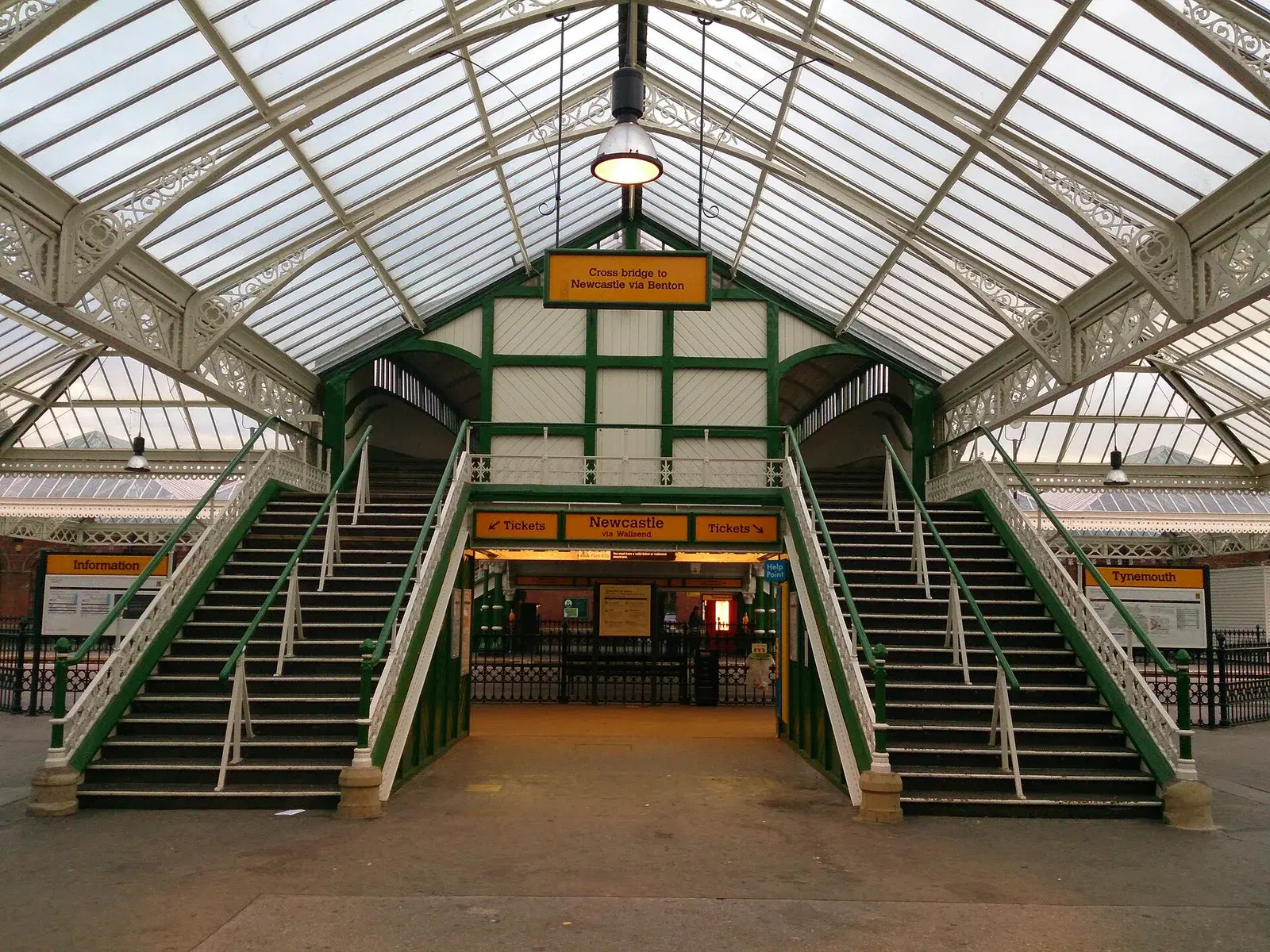
Tynemouth is a place of survivals. The priory still crowns the headland, the great station roof still shelters its market, and Front Street's Georgian houses still look out to sea. But for every landmark that endured, others were lost, some to fire, some to storm and some to the bulldozer. Their absence shapes the modern town as much as the buildings that remain. Here are some of the Tynemouth landmarks that are no longer with us, and the stories of how they vanished.
The Tynemouth Plaza, lost in a single night
The greatest loss of all stood on the Grand Parade above Long Sands. Opened in 1878 as the Tynemouth Aquarium and Winter Garden, a vast glass-domed pleasure palace of two towers and three floors, it had cost the enormous sum of £82,000 to build. Over its long life it was renamed the Tynemouth Palace in 1898 and the Tynemouth Plaza in 1926, and it housed aquariums, winter gardens, ballrooms, a theatre, roller-skating and amusement arcades in turn. On 10 February 1996 a huge fire tore through the building, drawing 70 firefighters, and it was demolished the same evening. Its site on the Grand Parade is open ground today.
Best for: Best for a vanished wonder: a glass palace that entertained the coast for over a century and was gone in a day.
The outdoor pool bulldozed into itself
Just along the shore at the southern end of Long Sands lies the sad outline of the Tynemouth Outdoor Pool. This concrete saltwater tidal pool opened on 30 May 1925 and was, for decades, one of the most popular spots on the coast, packed on warm days with swimmers and sunbathers. Cheap package holidays abroad drew the crowds away in the late 1970s, and in the mid 1990s the council demolished its buildings and bulldozed the rubble into the pool, capping it with concrete and boulders to form an artificial rock pool. Campaigners have long dreamed of bringing it back, and its ghostly rectangle is still visible below the cliffs.
A pier and lighthouse smashed by the sea
Not every loss was to fire or demolition. The original North Pier, completed in 1895 after four decades of construction, was almost destroyed by a ferocious storm in 1897 that left its lighthouse cut off from the land. The wrecked structure had to be replaced entirely, rebuilt to a new curved design by Tower Bridge engineer John Wolfe-Barry, with a new lighthouse first lit in 1908. The pier you walk today is the survivor of that disaster; the first one the sea simply took.
The Master Mariners' Homes and the wartime air raid
Along Tynemouth Road stood the Master Mariners' Homes, elegant almshouses built between 1837 and 1840 by the architects John and Benjamin Green for retired seafarers and their families, on land given by the Duke of Northumberland. The homes carried the arms of Trinity House and were a proud symbol of the Tyne's seafaring community. Part of the front facade was damaged by a German air raid in 1941, a reminder that Tynemouth's coastal position made it a target in wartime as well as a resort.
Churches that changed their calling
Some of Tynemouth's lost buildings were not demolished so much as repurposed beyond recognition. The Congregational church on Front Street, built in 1868 with a soaring spire added in 1873, lost its congregation and closed in 1973. Rather than fall to the wrecking ball it was reborn in 1980 as the Land of Green Ginger shopping arcade, so the building survives even though the church that filled it is gone. It is a rare happy ending among these stories, and a model for what might have been done elsewhere.
What the losses tell us
Walk the seafront today and the gaps speak as loudly as the landmarks. The open ground on the Grand Parade, the concrete rectangle below the cliffs and the rebuilt pier are all monuments to what Tynemouth once had. Yet the town's great survivors, the priory, the Collingwood Monument and the Victorian station, prove that plenty was saved too. The Blue Reef Aquarium even carries the old aquarium tradition forward on the same stretch of coast, the Collingwood Monument still commands the river mouth, and Tynemouth Priory and Castle endures after more than a thousand years. Knowing what was lost only makes those survivors more precious.
Frequently asked questions
When did Tynemouth Plaza burn down? The Tynemouth Plaza, which opened in 1878 as an aquarium and winter garden and later became a ballroom, theatre and amusement complex, was destroyed by a major fire on 10 February 1996. It was demolished the same evening, and its site on the Grand Parade is now open ground.
Is the Tynemouth outdoor pool still there? The Tynemouth Outdoor Pool, a saltwater tidal pool opened in 1925 at the southern end of Long Sands, closed and was largely filled in during the mid 1990s, when its buildings were demolished and the basin capped to form an artificial rock pool. Its outline is still visible below the cliffs, and campaigners have long hoped to restore it.
Why did Tynemouth's North Pier have to be rebuilt? The original North Pier, completed in 1895, was almost destroyed by a severe storm in 1897 that separated the lighthouse from the land. It was rebuilt to a new curved design by John Wolfe-Barry, the engineer of Tower Bridge, with a new lighthouse first lit in 1908, and that second pier is the one still standing today.
Have a suggestion? Get in touch.
Never miss what’s on
Join the weekly Tynemouth.live digest — the best events, news and local tips, straight to your inbox. Free, one email a week.