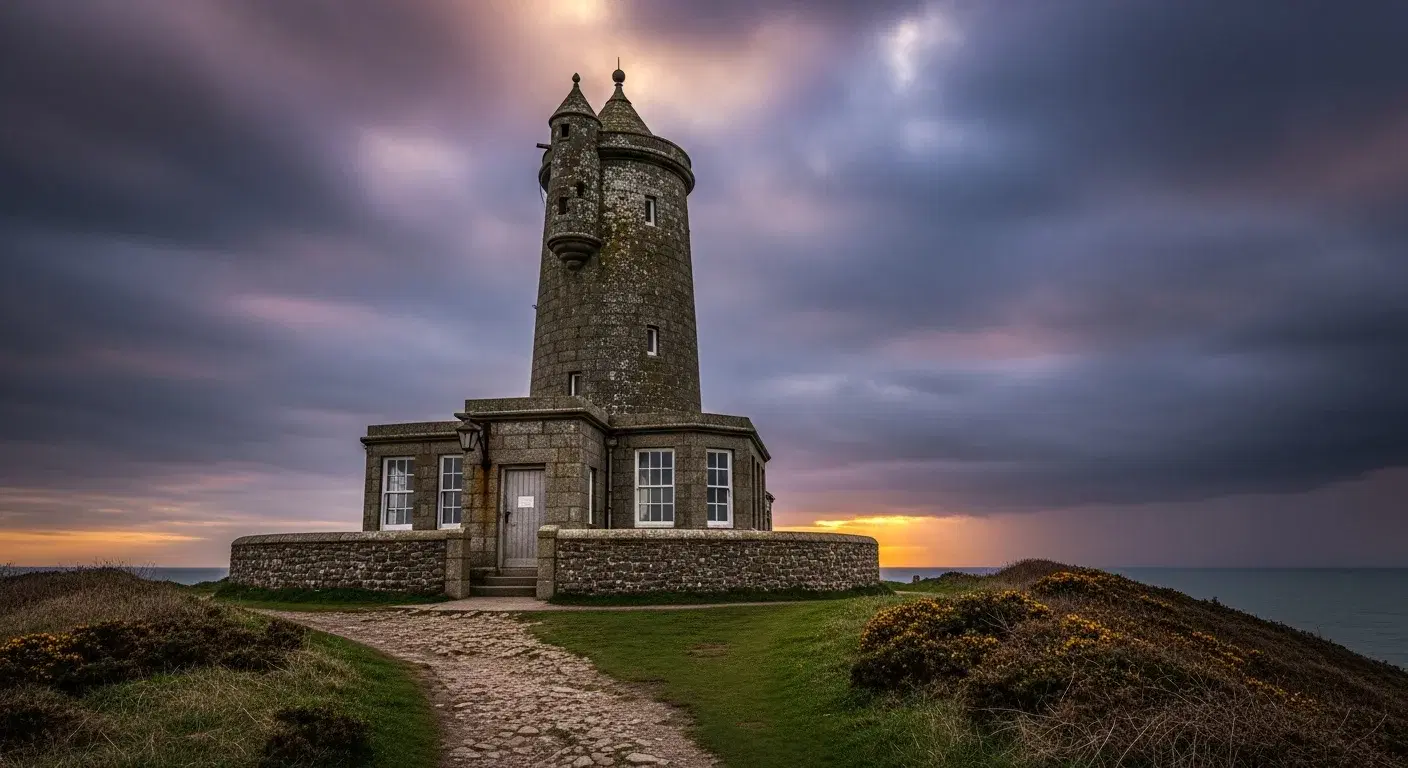
The Tynemouth Volunteer Life Brigade: The World's First Coastal Rescue Service
How a double shipwreck on the Black Middens rocks in 1864 led to the founding of the world's first volunteer life brigade, and how the TVLB continues to save lives over 160 years later.
On the evening of 24 November 1864, a fierce south-easterly gale drove two vessels onto the Black Middens rocks at the mouth of the River Tyne. By the time the storm passed, 32 people were dead. The tragedy shocked Tynemouth, and led directly to the founding of what would become the world's first volunteer coastal rescue organisation.
The Tynemouth Volunteer Life Brigade (TVLB) has been saving lives ever since.
The Wreck That Changed Everything
The Black Middens are a treacherous reef of rocks lying just below the waterline at the entrance to the Tyne. On that November afternoon in 1864, the schooner Friendship was running for the shelter of the river when she was driven ashore on the western end of the rocks. Tragically, the Coastguard and the local lifeboat crews each assumed the other had mounted a rescue. Nobody went to her aid.
Within hours, the passenger steamer SS Stanley, on passage from Aberdeen to London under Captain Howling, also attempted to enter the Tyne. A huge sea struck her and drove her onto the Middens, seaward of where the Friendship already lay stricken. All six crew of the Friendship and 26 people aboard the Stanley perished, passengers, crew, and the livestock the ship had been carrying on her open deck.
Thousands of people watched from the cliffs, powerless to help. The disaster exposed a fatal gap: there was no organised, trained body of volunteers ready to assist the professional Coastguard when shipwrecks occurred.
Best for: The Black Middens rocks have claimed hundreds of vessels over the centuries, their low profile makes them almost invisible in rough seas.
The Founding of the TVLB
Among those who witnessed the disaster was John Morrison, an officer in the military volunteers based at Tynemouth Castle. Morrison believed that had there been a disciplined team of trained men to assist the Coastguard, the breeches buoy apparatus could have been deployed in time to save everyone aboard both ships.
Morrison approached John Foster Spence and his brother Joseph Spence, both prominent local civic figures. They took up the cause immediately, drafting rules for a new organisation and securing agreement from the Board of Trade. On 5 December 1864, just eleven days after the disaster. A public meeting was called at North Shields Town Hall.
The response was overwhelming. Over 100 men signed up on the spot, and the Tynemouth Volunteer Life Brigade was born, the first organisation of its kind anywhere in the world.
How the Brigade Works
The TVLB's original purpose was to provide a team of trained, ready volunteers who could assist HM Coastguard in rescuing people from shipwrecks. In the 19th century, this principally meant operating the breeches buoy, a rope-and-pulley system that could carry survivors from a stricken vessel to the shore, one at a time.
The brigade members were not professional seafarers. They were local tradesmen, shopkeepers, and workers who trained in their spare time and responded to the rocket signal that summoned them whenever a ship was in distress. The Watch House on the headland served as their base, a lookout point where members could scan the sea for vessels in trouble.
Today the TVLB is a declared facility to HM Coastguard, providing a 24-hour, 365-day shore-based coastal rescue service. A team of around 20 active volunteers responds to an average of 120 callouts a year, with a member typically on scene within five to ten minutes of being tasked. Summer is the busiest period, with incidents ranging from people cut off by tides to cliff rescues and searches for missing persons.
Best for: The TVLB remains one of only three active Volunteer Life Brigades in the United Kingdom.
The Watch House Museum
The brigade's historic headquarters, the Watch House, still stands on the headland near the Spanish Battery, close to the Collingwood Monument on Pier Road. It has been in continuous use since the brigade's earliest days.
Today the Watch House operates as a free museum, housing a remarkable collection of rescue equipment, photographs, ship models, and artefacts spanning more than 160 years of lifesaving. Displays cover the founding disaster, the evolution of rescue techniques, and the brigade's ongoing work.
The museum is open 10am to 3pm on Saturdays, Sundays, and Bank Holidays from Easter until the end of August. Group visits outside these hours can be arranged by contacting the Watch House team. Admission is free, though donations are welcomed.
It is well worth combining a visit with a walk along the headland to the Priory and Castle. The Watch House is just a few minutes' walk from the English Heritage entrance.
Notable Rescues
Over its long history, the brigade has been involved in countless rescue operations. One of the most celebrated came in 1891, during the rescue of the crew of the schooner Peggy. The operation was so hazardous and so bravely executed that it resulted in the award of the Albert Medal (a predecessor of the George Cross) and the inaugural Tynemouth Medal, the brigade's own award for exceptional gallantry.
The brigade's work continues to this day. In April 2026, HM Coastguard tasked the TVLB to support Cullercoats RNLI in extracting a member of the public who had been cut off by the tide after visiting St Mary's Lighthouse, a reminder that the sea remains as dangerous as ever, and that trained volunteers remain as essential as they were in 1864.
A Living Legacy
The Tynemouth Volunteer Life Brigade is more than a museum piece. It is a living, working rescue service, the oldest of its kind in the world, staffed entirely by volunteers who give their time to keep the coast safe. The founding principle set down by John Morrison, John Foster Spence, and those 100 men who signed up in North Shields Town Hall in 1864 endures: trained, disciplined volunteers, ready to act when the sea turns dangerous.
If you are walking the coast or visiting King Edward's Bay, take a moment to look up at the Watch House on the headland. Chances are, someone is watching the sea, just as they have been for over 160 years.
To learn more, visit the Tynemouth Volunteer Life Brigade website or the Watch House Museum on Pier Road. Get in touch.
Never miss what’s on
Join the weekly Tynemouth.live digest — the best events, news and local tips, straight to your inbox. Free, one email a week.