Rock Pooling at Tynemouth: A Family Guide
Where to go, what to find, and how to stay safe, a family guide to rock pooling at Tynemouth's beaches, from shore crabs and anemones to blennies and starfish.
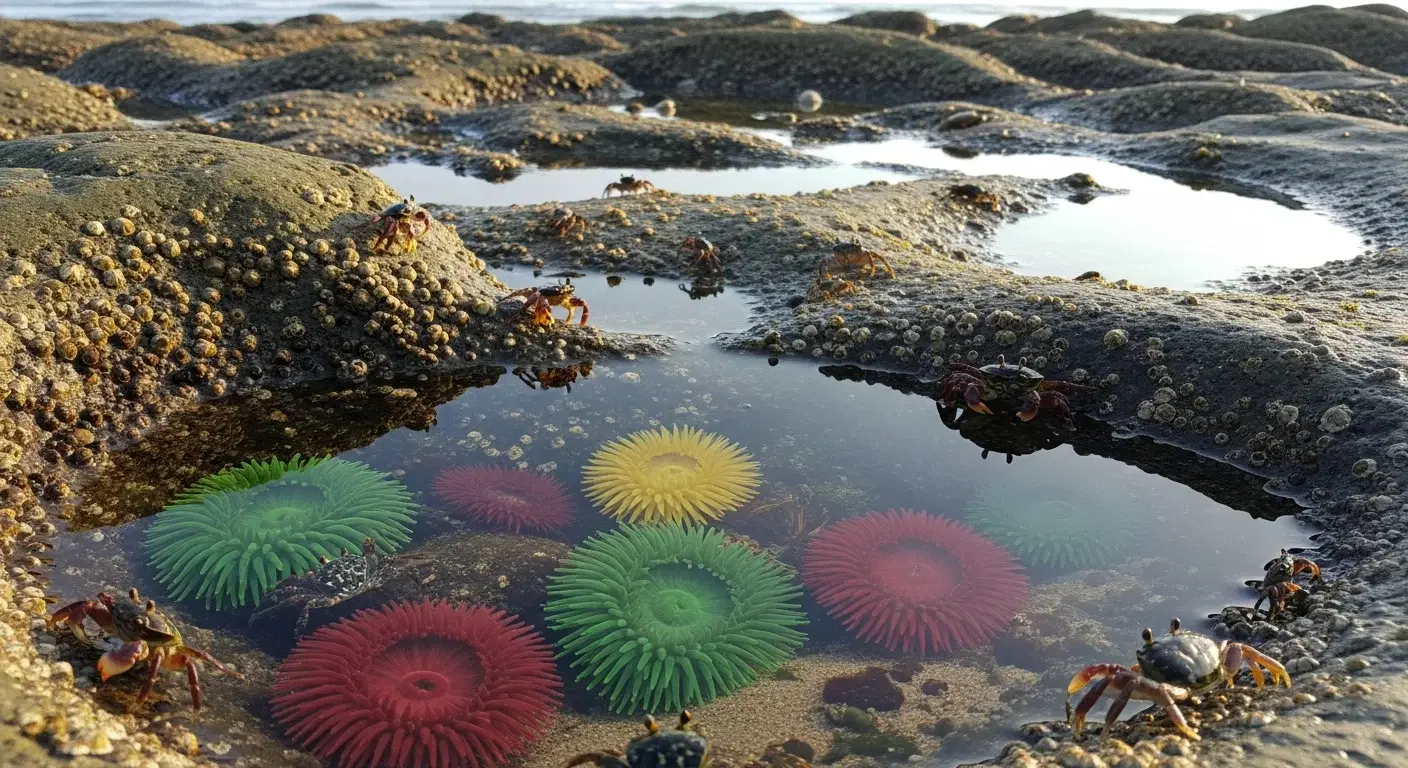
Rock pooling is one of the best free things to do with children on the Tynemouth coast. At low tide, the rocky platforms, known locally as skeers, at King Edward's Bay and the northern end of Longsands reveal a miniature underwater world of crabs, anemones, small fish, and starfish. All you need is a pair of wellies and a sense of curiosity.
Here is everything you need to know to plan a rock pooling trip with the family.
Where to Go
King Edward's Bay
The best rock pooling in Tynemouth is at King Edward's Bay, the small sheltered cove beneath the Priory headland. At low tide, excellent pools are exposed at the base of the cliffs on both sides of the bay. The rocks here are rough sandstone and limestone, which hold water well and create deep, stable pools that teem with life.
King Edward's Bay is accessed via steep steps from Pier Road, not suitable for pushchairs, but manageable for children who can walk independently. The cove is sheltered, relatively quiet, and patrolled by RNLI lifeguards during the summer months.
Longsands (Northern End)
The northern end of Longsands, close to the headland, also has rocky outcrops that are exposed at low tide. The pools here tend to be shallower and more spread out than at King Edward's Bay, but they are easier to access, no steep steps, and the wide sandy beach means children can alternate between rock pooling and sandcastles.
Cullercoats Bay
A short walk from Tynemouth, Cullercoats Bay has rock pools at both ends of the beach that are well worth exploring, particularly at a spring low tide when the rocks are fully uncovered.
Best for: King Edward's Bay offers the deepest and most sheltered rock pools, arrive as the tide falls for the best experience.
When to Go
Rock pooling is all about the tides. The pools are only properly accessible in the two hours either side of low tide, roughly a four-hour window.
Spring low tides (which occur around new and full moons) expose the most rock and the deepest pools, revealing creatures that are normally always submerged. These are the best days for finding starfish, larger crabs, and fish.
Check tide times before you set out. The BBC Weather tide tables or the NTSLSC website will give you accurate predictions for Tynemouth.
Top tip: Arrive about an hour before low tide. This gives you maximum pool-exploring time as the water recedes, and means you will naturally be heading back up the beach as the tide turns.
What You Will Find
The rock pools at Tynemouth are rich in marine life. Here are the species you are most likely to encounter:
Shore Crabs
The shore crab (Carcinus maenas) is the rock pool classic, small, green-brown, and usually hiding under stones or seaweed. Children love finding them, and they are completely harmless (though they may give a small nip if handled carelessly). Look under rocks and in crevices, and always replace stones carefully after looking.
Beadlet Anemones
The beadlet anemone is one of the easiest creatures to spot, a vivid blob of dark red or green, attached to rocks in the splash zone. When submerged, they open their ring of tentacles to catch food; when exposed to air, they retract into a smooth, jelly-like dome. They are remarkably tough, surviving hours of exposure to sun, wind, and even freezing temperatures.
Blennies
Common blennies (also called shannies) are small, well-camouflaged fish that dart between rocks in shallow pools. They are surprisingly bold and will often sit motionless, watching you from a crevice with their characteristically large eyes. Patience is the key to spotting them.
Limpets
Limpets are the cone-shaped shells clamped tightly to rock surfaces throughout the tidal zone. They look immovable, but each limpet actually travels a fixed route across its home rock to graze on algae before returning to exactly the same spot. The ridged grey-white shell can be up to six centimetres across.
Starfish
Common starfish are found in deeper pools, particularly at the lowest tides. They are usually orange or brown and around 10-15 centimetres across. Look in rock crevices and under overhangs where they shelter from the sun.
Other Finds
You may also discover hermit crabs (borrowing snail shells for protection), periwinkles, topshells, sea lettuce and other seaweeds, barnacles, and, if you are lucky, a squat lobster or a butterfish hiding under a flat stone.
Safety Tips
Rock pooling is a wonderfully safe activity, but the coast demands respect. Keep these points in mind:
- Watch the tide. Always know when low tide is and start heading back well before the water returns. Incoming tides can cut off rocky platforms surprisingly fast.
- Wear appropriate footwear. Wet rocks are slippery. Wellies or old trainers with good grip are far better than bare feet or flip-flops.
- Supervise children closely. Pools are shallow, but the rocks around them can be uneven and algae-covered.
- Handle creatures gently. If you pick up a crab or starfish, keep it in a shallow pool of seawater and return it to the same spot within a few minutes.
- Replace stones. Always put rocks back exactly where you found them, turning stones exposes the creatures sheltering underneath to predators and sun.
- Leave everything behind. Rock pool creatures are protected. Never take animals or shells home.
- Check the weather. Avoid rock pooling in heavy swell or strong onshore winds, which can send unexpected waves across the platforms.
Best for: The golden rule of rock pooling: look, enjoy, and leave everything exactly as you found it.
What to Bring
You do not need much equipment, but a few items make the experience better:
- Wellies or grip shoes, essential on wet rocks
- A small bucket or clear container, fill with seawater for a closer look at finds before returning them
- A basic identification guide, the Wildlife Trusts and the Marine Conservation Society publish free printable guides
- Sun cream and a hat, you will be out on exposed rock for a while
- A towel, children will get wet; it is inevitable
For more family-friendly activities, see our guide to free things to do in Tynemouth and King Edward's Bay. Get in touch.
Never miss what’s on
Join the weekly Tynemouth.live digest — the best events, news and local tips, straight to your inbox. Free, one email a week.