Cullercoats Smuggling & Prior's Haven: Hidden History of the North Tyne Coast
From a customs officer's secret tunnel to a medieval monks' harbour, the stretch of coast between Cullercoats and Tynemouth hides centuries of intrigue beneath its cliffs.
The stretch of coast between Cullercoats and Tynemouth looks peaceful enough today, surfers, dog walkers, and families picking their way across rock pools. But beneath the cliffs and tucked inside the headlands, this shoreline hides a history of smuggling, secret tunnels, and monastic harbours stretching back centuries.
If you have ever walked past Cliff House on the Cullercoats clifftop or parked at Prior's Haven below the Priory, you have been standing on ground with a story worth knowing.
The Smuggler King of Cullercoats
In 1768, a man named Captain Thomas Armstrong built an imposing house on the cliff edge at Cullercoats. Armstrong was no ordinary homeowner, he was a serving officer of HM Customs, commanding the cutter Bridlington on anti-smuggling patrols along the coast between Newcastle and Sunderland.
On the surface, Armstrong was a zealous enforcer. Beneath the surface, quite literally, he was running a smuggling operation of his own.
Cliff House, as it became known, was built with unusually deep double cellars. A tunnel ran from the cellars through the cliff face, emerging just above the high tide mark on the shore below. Under cover of darkness, contraband could be landed on the beach and spirited up through the rock into the house without anyone on the road above being any the wiser.
Armstrong's father, Nicholas, had been a "Riding Officer", one of the horseback patrols who rode the coast watching for smugglers. Thomas followed him into the customs service, winning his first posting as first mate of the Bridlington at the age of 23. But by the early 1770s, his crew and captain had begun accusing him of embezzling seized goods. In 1771 he was caught skimming five bags of tea from a confiscation. In 1776, Armstrong was finally dismissed after he allowed two notorious smugglers to escape custody.
The story, pieced together from customs records at The National Archives, paints a vivid picture of corruption on the Georgian coast, the very man charged with stopping the smugglers was profiting from them.
Best for: Cliff House still stands on Victoria Crescent in Cullercoats. The tunnel entrance on the shore has long since collapsed, but the house itself is a reminder of the coast's lawless past.
Cullercoats Bay: Salt, Coal, and Cobles
Smuggling was far from the only trade on this coast. The name Cullercoats is thought to derive from "culver cotes", dovecotes, though the village's economy was built on harder industries. From the 1670s, Cullercoats served as a port for exporting both salt and coal. A new harbour and pier were constructed in 1682, and a waggonway bringing coal from inland workings was added in 1690.
When the local collieries closed in 1724 and the salt pans moved to Blyth two years later, fishing became the dominant trade. Two stone piers were built on either side of the bay in the 19th century to shelter the cobles, the flat-bottomed boats launched directly from the beach that were the workhorses of the North East fishing fleet.
Today, Cullercoats Bay is best known for its sheltered sandy beach and rock pools, but the harbour walls and the Watch House on the northern headland are tangible links to this working past.
Prior's Haven: The Monks' Harbour
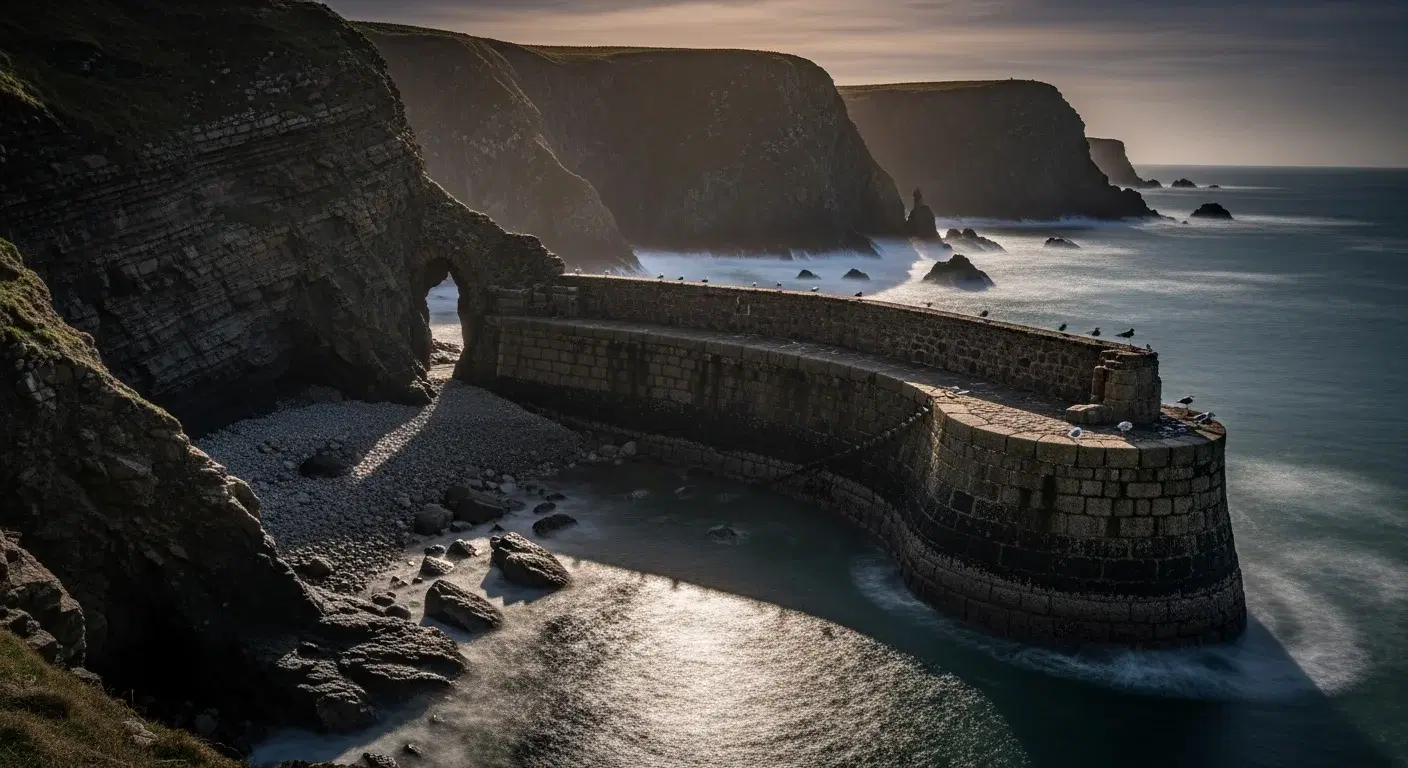
A mile south along the coast, tucked between the Priory headland and the mouth of the Tyne, sits Prior's Haven. Most visitors know it as a car park and the home of Tynemouth Sailing Club, but its name tells a much older story.
When Benedictine monks refounded the monastery on the headland in 1083, they needed a sheltered landing point for supplies arriving by sea. Prior's Haven, literally the prior's harbour, served that role. The natural cove, protected from the worst of the North Sea by the rocky headland, was the monastery's link to the wider world.
The priory grew wealthy over the following centuries, and in the early 13th century the prior developed a more substantial port at North Shields, further up the Tyne. But Prior's Haven remained in use, sheltered by the same projecting rock that protects the rowing and sailing clubs based there today.
For more on the Priory's remarkable history, see our complete visitor guide.
Best for: Prior's Haven is free to visit and makes a peaceful stop on the coastal walk, look for the old stone slipway beneath the castle walls.
Thousands of Years on One Headland
The Tynemouth headland itself has been occupied for far longer than either smugglers or monks. Archaeological evidence suggests an Iron Age settlement existed here, and a Saxon monastery was established in the 7th century, long before the Benedictines arrived. St Oswin, the murdered King of Deira, was buried here in 651 AD, and his tomb became a place of pilgrimage.
The headland has been, at various times, a place of worship, a fortress, a prison for wayward monks sent north as punishment from St Albans, and a coastal gun battery defending the Tyne through two world wars. That layering of history, religious, military, industrial, criminal, is what makes this short stretch of coast so remarkable.
Walking the Hidden History
You can trace much of this history on foot in a single afternoon. Start at Cullercoats Bay, walk south along the coastal path past King Edward's Bay, up to the Priory headland, and down to Prior's Haven. The distance is barely two miles, but you will pass through centuries of smuggling, fishing, monastic life, and military defence along the way.
For a longer route, our best walks guide covers several options that take in these landmarks as part of wider circuits.
Know more about the hidden history of this coast? Get in touch.
Never miss what’s on
Join the weekly Tynemouth.live digest — the best events, news and local tips, straight to your inbox. Free, one email a week.