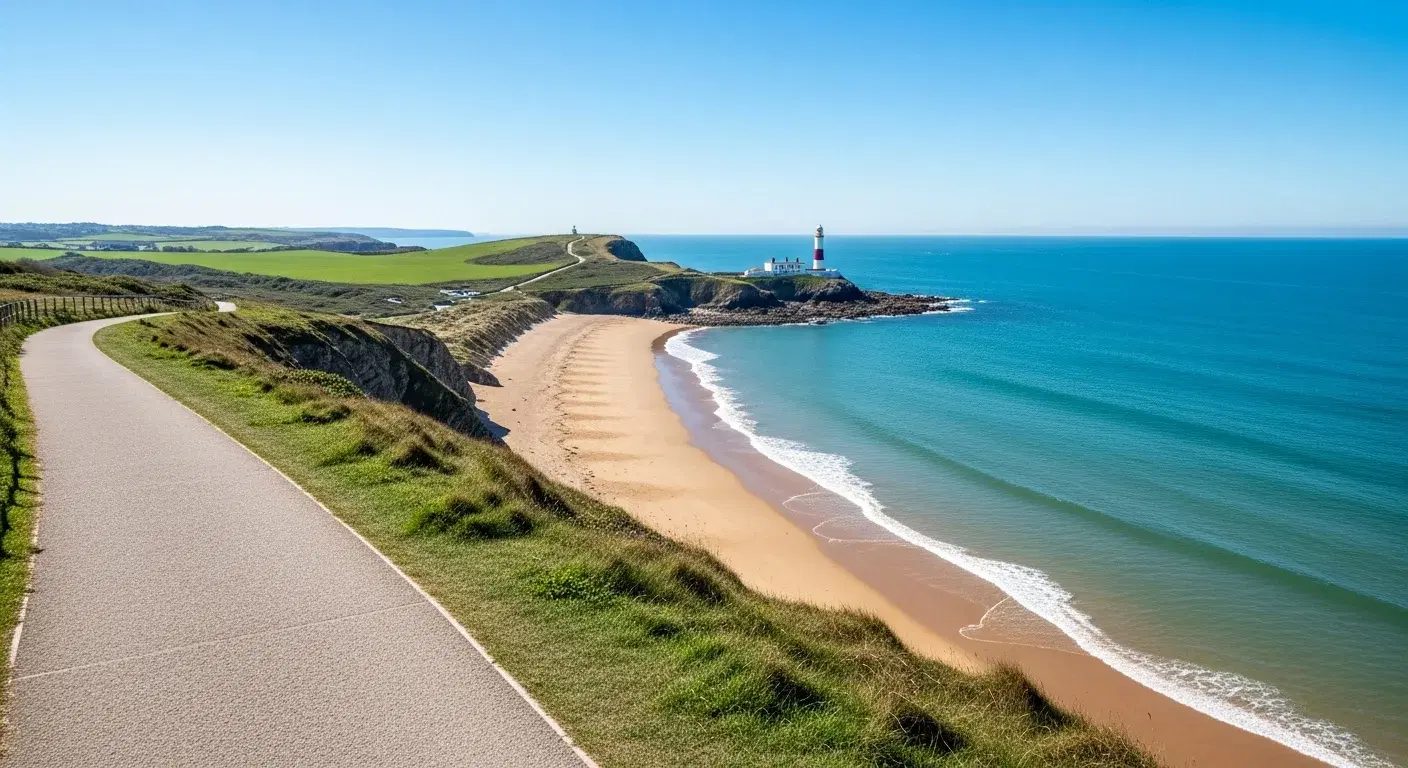
The North Tyneside Coastal Walk
A complete route guide for the North Tyneside coastal walk from St Mary's Island to the Fish Quay, roughly 7km of beaches, bays, and clifftop paths.
The North Tyneside coastal walk is one of the finest stretches of urban coastline in England. Running from St Mary's Island in the north down through Whitley Bay, Cullercoats, and Tynemouth to the historic Fish Quay at North Shields, it covers roughly seven kilometres of sandy beaches, rocky bays, clifftop paths, and harbour views.
The route is mostly flat, well-surfaced, and accessible. You can walk it in either direction, pick it up at any point, or break it into shorter sections. Here is the full route guide.
Best for: The full walk takes approximately two hours at a steady pace. Allow longer if you plan to stop at beaches or cafes along the way.
St Mary's Island to Whitley Bay (2km)
Start at St Mary's Island, where the distinctive white lighthouse sits on a tidal island accessible via a causeway at low tide. The nature reserve surrounding the island is excellent for birdwatching, with rock pools exposed at low tide.
Head south along the promenade, passing Curry's Point and the wide sweep of Whitley Sands. This section is flat and paved, running alongside the beach with views out to sea. On a clear day you can see as far as the Farne Islands to the north.
As you approach Whitley Bay, the Spanish City dome comes into view, the restored Edwardian pleasure palace that now houses restaurants and a cafe. This is a good first refreshment stop if needed.
Whitley Bay to Cullercoats (1.5km)
Continue south from Whitley Bay along the promenade. The path passes above a series of rocky outcrops before descending to Cullercoats Bay, a beautiful, sheltered horseshoe-shaped cove flanked by two piers.
Cullercoats has a long artistic heritage: the colony of painters known as the Cullercoats School was based here in the 1880s, attracted by the quality of light and the character of the fishing community. The lifeboat station at the southern end of the bay is still operational.
There are public toilets, a cafe (Cullercoats Coffee), and benches overlooking the bay. This is one of the most picturesque spots on the entire walk.
Cullercoats to Tynemouth Longsands (1.5km)
From Cullercoats, the path climbs slightly around Sharpness Point, a rocky headland with excellent views in both directions. The route then drops down to the northern end of Longsands beach, Tynemouth's main stretch of golden sand.
You can choose to walk along the beach itself (conditions permitting) or stay on the promenade above. Longsands runs for over half a mile, backed by the Victorian buildings of Grand Parade. Surf schools operate from the beach, and the RNLI provides lifeguard cover from late May to early September.
At the southern end of Longsands, you will see the headland crowned by Tynemouth Priory and Castle.
Tynemouth to the Fish Quay (2km)
From the southern end of Longsands, the path climbs to the Priory headland. You can visit the English Heritage ruins (admission applies) or simply follow the path around the headland for panoramic views of the river mouth, the two piers, and the North Sea.
Descend past King Edward's Bay, a small, sheltered beach beneath the cliffs, and continue along the cliff path. The route passes the Spanish Battery (a Napoleonic-era gun emplacement) before dropping down to the river.
Follow the riverside path to North Shields Fish Quay, where fishing boats still land their catch daily. The quay is lined with restaurants, pubs, and converted warehouses, making it an excellent place to finish the walk with a meal or a pint.
Best for: End the walk with fresh seafood at one of the Fish Quay restaurants, the Staith House and Dodgin's Yard are both excellent choices.
Practical Information
Distance: Approximately 7km (4.3 miles) one way.
Duration: 1.5 to 2.5 hours depending on pace and stops.
Surface: Mostly paved paths and promenades. Some sections offer the option of walking on sand. Short sections near headlands may be uneven.
Accessibility: The main route is largely flat and suitable for pushchairs and wheelchairs, though some headland sections have steps. A new Seafront Sustainable Route project is improving accessibility along the full stretch with separate walking and cycling paths.
Public transport: The Metro runs parallel to the coast with stations at Whitley Bay, Cullercoats, Tynemouth, and North Shields, meaning you can walk one way and catch the Metro back.
Facilities: Public toilets at St Mary's Island, Whitley Bay, Cullercoats, and Tynemouth. Cafes and shops at regular intervals throughout.
Dogs: Welcome on the coastal path. Seasonal beach restrictions apply to parts of Longsands and Cullercoats from May to September.
Have a tip for fellow walkers? Get in touch.
Never miss what’s on
Join the weekly Tynemouth.live digest — the best events, news and local tips, straight to your inbox. Free, one email a week.
What's On
Tynemouth Station Market
9:00am - 3:30pm · Tynemouth Metro Station, Tynemouth
Tynemouth Station Market
9:00am - 3:30pm · Tynemouth Metro Station, Tynemouth
Tynemouth Station Book Fair
9:30 AM - 3:30 PM · Tynemouth Station (West concourse), Station Terrace, Tynemouth, NE30 4RE