Scuba Diving Near Tynemouth
From PADI courses and BSAC clubs to wreck dives off the Northumberland coast and seal encounters at the Farne Islands, here is your guide to scuba diving near Tynemouth.
Tynemouth sits at the mouth of the Tyne, where the river meets the North Sea. That position has shaped the coastline's maritime history for centuries, and left a seabed scattered with wrecks, reefs, and marine life that makes the North East one of the best diving regions in England.
Whether you are a complete beginner looking to try scuba for the first time or an experienced diver searching for new wrecks and seal encounters, Tynemouth is a natural base. Here is what you need to know.
Where to Learn
Two main training routes exist in the UK: PADI (Professional Association of Diving Instructors) and BSAC (British Sub-Aqua Club). Both produce competent, safe divers, the choice often comes down to whether you prefer a structured course at a dive centre or a club-based learning environment.
PADI Dive Centres
Aquanorth Diving Centre in South Shields is a PADI 5-Star IDC centre offering the full range of PADI courses, from Discover Scuba Diving taster sessions through to Instructor level. They also run an active dive club with regular boat trips to the Farne Islands and beyond.
Scuba Life UK is a PADI dive centre based in Newcastle upon Tyne. Their team of instructors have over 60 years of combined experience and offer courses at every level, plus monthly boat trips to the Farne Islands and St Abbs marine reserve across the Scottish border.
The Diving Centre in East Boldon is another PADI 5-Star IDC centre, with 12 instructors on the team. They offer courses from beginner try-dives to professional level, along with equipment sales, air fills, and nitrox.
Best for: Three PADI 5-Star centres within easy reach of Tynemouth, plus BSAC clubs offering structured training through their Ocean Diver and Sports Diver courses.
Local Dive Clubs
BSAC Tyneside 114
BSAC Tyneside 114 is a small, friendly BSAC club that dives most weekends with a busy calendar of local and away trips. Recent destinations include the Tyne coast, Farne Islands, St Abbs, the Sound of Mull, and Tenerife. The club runs in-house training from Ocean Diver upwards, making it a good option for beginners who want to learn within a social, club-based setting.
Other BSAC clubs in the area include Northumbria BSAC, Washington BSAC, and Poseidon Sub Aqua Club in Wallsend. Newcastle University Sub-Aqua Club (NUSAC) is also active and open to students.
Shore Dive Sites
The North East coast offers several accessible shore dives within a short drive of Tynemouth.
Cullercoats Bay
The sheltered crescent of Cullercoats Bay, just a few minutes' walk from Tynemouth, is used by local divers as a training site and gentle shore dive. The rocky outcrops either side of the bay harbour crabs, anemones, and small fish. Visibility can be variable, so check conditions before heading in.
St Mary's Island
The rock platforms around St Mary's Island at Whitley Bay provide another option for shore diving at low tide, with kelp forests, lobsters, and nudibranchs among the gullies. Access is tide-dependent, you must be aware of the causeway times.
St Abbs (Day Trip)
Across the Scottish border, the St Abbs and Eyemouth Voluntary Marine Reserve is widely regarded as one of the best shore dives in Britain. Visibility regularly reaches 8 to 10 metres year-round, and the underwater scenery, towering rock walls, swim-throughs, and kelp forests, is spectacular. Cathedral Rock is the most famous dive. It is roughly an hour's drive from Tynemouth and a popular day trip for local clubs.
Boat Diving and Wrecks
The North East coast has claimed hundreds of ships over the centuries, and the seabed from the Tyne to the Farne Islands is rich with wrecks at varying depths.
Wrecks off the Tyne
Several notable wrecks lie close to the mouth of the Tyne, many dating from the two world wars. Depths vary, but there are options suitable for newly qualified divers as well as deeper, more advanced wreck penetrations. Local dive centres and clubs can advise on current conditions and access.
The Farne Islands
The Farne Islands, roughly 30 islands and rock outcrops lying two to four miles off the Northumberland coast near Seahouses, are the jewel of North East diving. The combination of wrecks, a colony of around 4,000 grey seals, and unusual marine species makes for some of the best diving in England.
Wreck highlights include the Somali, a 6,810-ton passenger-cargo steamer that sits upright in 30 metres of water near Beadnell with much of her 450-foot hull intact, and the Abyssinia, a German ship resting at around 18 metres on the Knivestone Rocks.
The real draw, though, is the seals. Young grey seals are famously inquisitive and will approach divers to nibble fins, tug on equipment, and generally show off. The best time for seal encounters is late September to early October. Boat charters operate from Seahouses, about an hour north of Tynemouth.
Best for: The Farne Islands offer world-class seal diving, spectacular wrecks, and some of the best underwater scenery in England, all within an hour of Tynemouth.
Marine Life
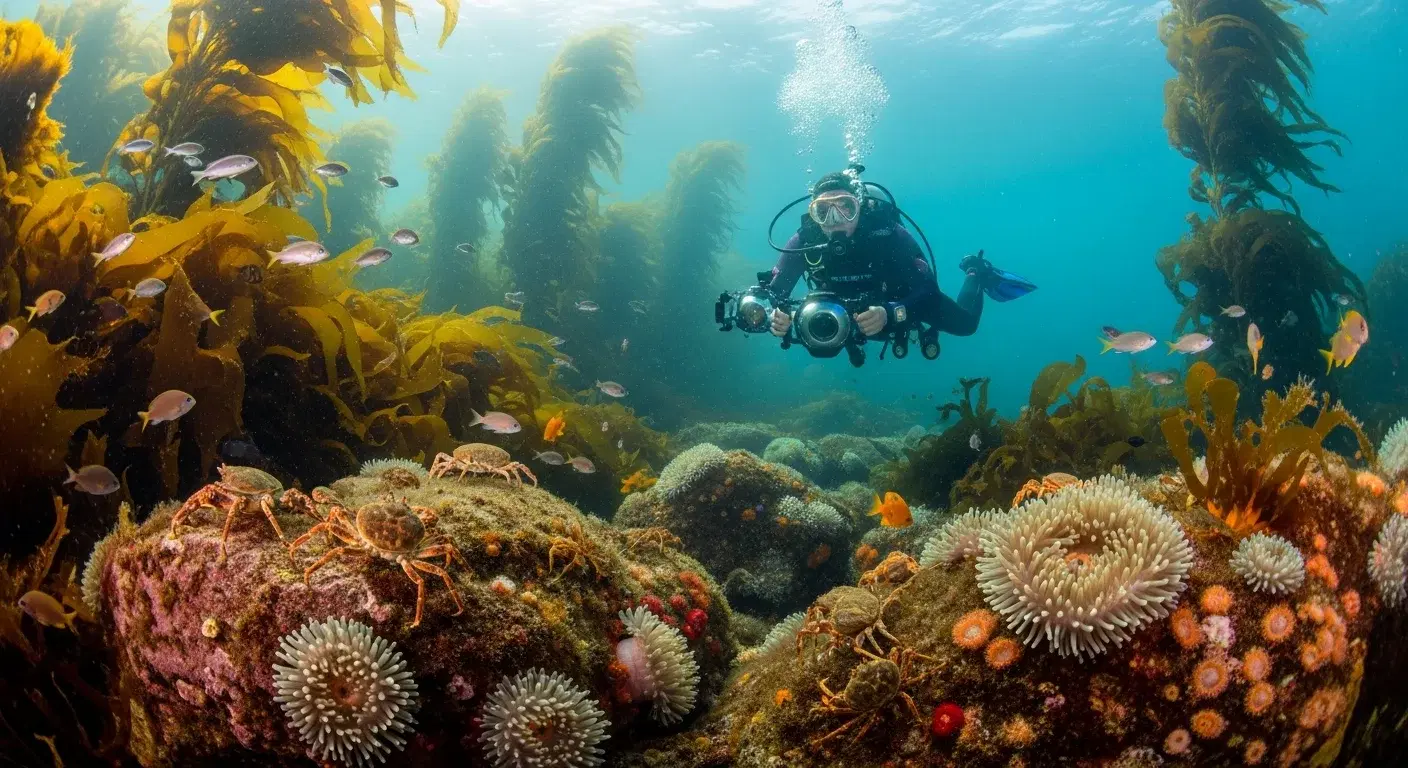
You do not need to travel to the Farnes to see wildlife. Diving around the Tyne coast, you can expect to encounter edible crabs, velvet swimming crabs, lobsters, butterfish, scorpionfish, dahlia anemones, dead man's fingers soft coral, nudibranchs, and the occasional ballan wrasse. Seals are regularly spotted around the mouth of the Tyne itself, particularly near the piers.
Water Temperature and Visibility
The North Sea is not warm. Expect water temperatures of roughly 6 to 8 degrees Celsius in winter and spring, rising to 12 to 15 degrees in late summer and early autumn. A drysuit is standard kit for year-round diving in the North East; most local divers switch to drysuits early in their training.
Visibility varies with conditions. On a good day at an offshore site or St Abbs, you might see 10 metres or more. Close inshore after a storm or heavy rain, it can drop to a metre or two. Spring and early summer often bring plankton blooms that reduce visibility temporarily before conditions clear again.
Equipment Hire
All three PADI centres listed above offer equipment hire alongside their courses. If you are already qualified and visiting, contact Aquanorth or The Diving Centre to arrange cylinder hire, air fills, and any kit you need. Both stock a full range of diving equipment for sale as well.
Getting Started
The simplest way in is to book a PADI Discover Scuba Diving experience or a BSAC Try Dive session. These cost-effective taster sessions let you breathe underwater in a pool before committing to a full course. From there, a PADI Open Water or BSAC Ocean Diver qualification typically takes a few weekends and opens up the entire coastline.
Once qualified, joining a local club is the fastest way to build experience. Clubs provide boat access, buddy systems, and the local knowledge that turns a good dive site into a great one.
Interested in diving near Tynemouth? Get in touch if we've missed a club or dive site.
Never miss what’s on
Join the weekly Tynemouth.live digest — the best events, news and local tips, straight to your inbox. Free, one email a week.
What's On
Tynemouth Station Market
9:00am - 3:30pm · Tynemouth Metro Station, Tynemouth
Tynemouth Station Market
9:00am - 3:30pm · Tynemouth Metro Station, Tynemouth
Tynemouth Station Book Fair
9:30 AM - 3:30 PM · Tynemouth Station (West concourse), Station Terrace, Tynemouth, NE30 4RE